

NSFAS 2026 Appeals Applications Are Open
The National Student Financial Aid Scheme (NSFAS) received a high volume of funding applications for the 2026 academic year. Students whose applications were unsuccessful now have an opportunity to submit an appeal.
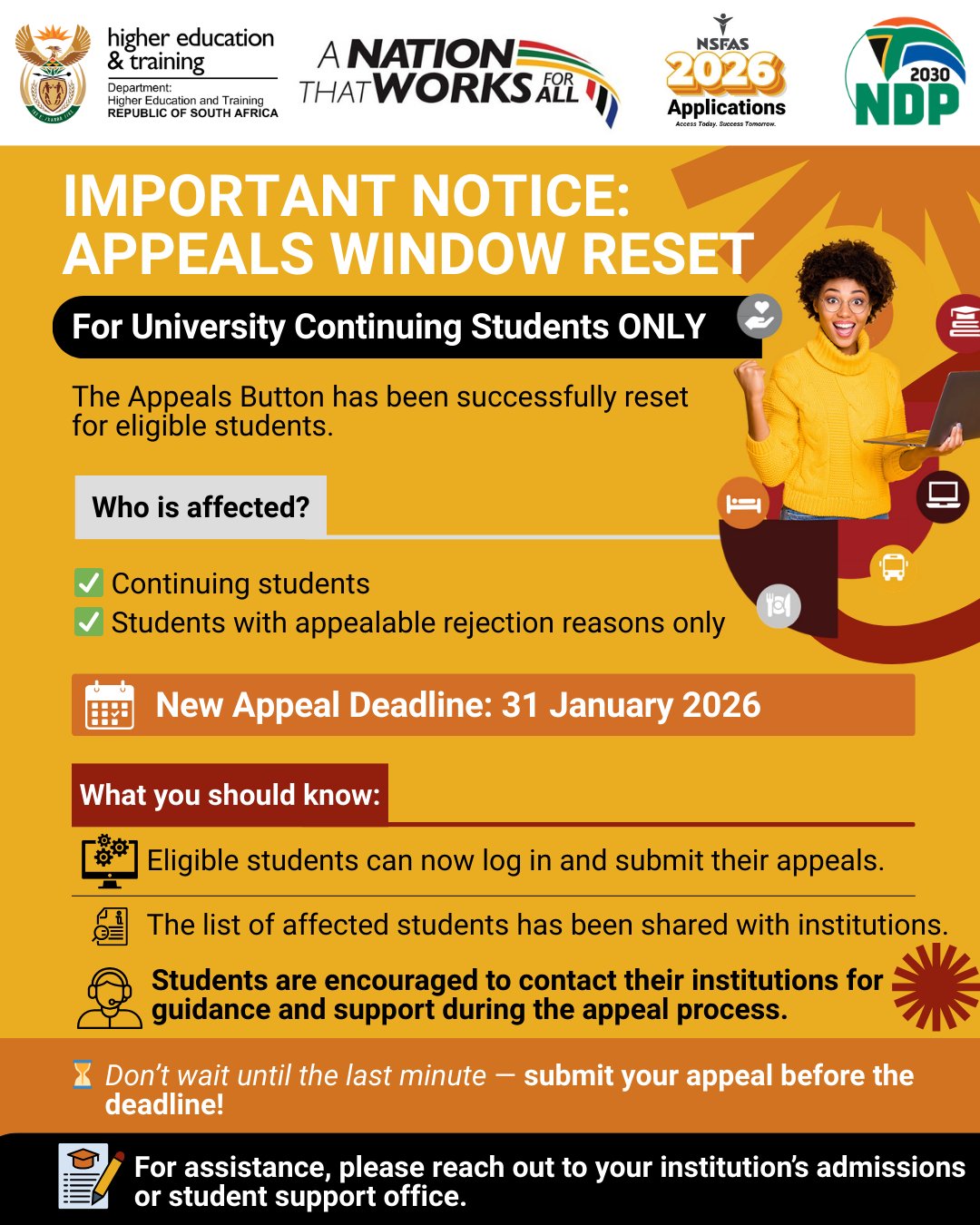
NSFAS has confirmed that the appeals window has been reopened, specifically for continuing university students whose funding was not renewed, but believe this decision was made in error. The appeals option has been reactivated on the system for qualifying students, and the new closing date for these continuing students is 31 January 2026.
Students who were not approved for funding can now access the appeals section by logging into their MyNSFAS accounts. NSFAS encourages students to seek assistance from their institutions during the appeals process and strongly advises submitting appeals as early as possible rather than waiting until the deadline.
Appeals are also available to new applicants who applied for NSFAS funding in the current year and were rejected. These applicants have 30 days from the date they were notified of the rejection to lodge an appeal.
NSFAS plays a critical role in supporting South African students who require financial assistance to access higher education. While the scheme offers extensive bursaries and student loans for approved university and TVET college programmes—covering tuition, registration, accommodation, meals, and learning materials—not all applications are successful.
If an NSFAS application is declined, the applicant is entitled to appeal the decision. Appeals must be submitted within 30 days of receiving the outcome. Submitting an appeal notifies NSFAS that the applicant is requesting a review of their funding decision.
Appeals Based on Financial Circumstances
Students who were declined due to exceeding the NSFAS income limit may still qualify for an appeal under certain conditions, including:
- A significant change in household income after the initial application, such as job loss or reduced earnings. Supporting documents must be provided.
- The death or medical incapacity of the main household income earner since the application was submitted, supported by official documentation.
- A court ruling declaring the student financially independent from their parents, removing their responsibility for education-related costs.
- Students from child-headed households may appeal if they submit verification documents from a registered social worker affiliated with the Department of Social Development.
- In cases of divorce where a court order assigns educational financial responsibility to only one parent who meets NSFAS income requirements, an appeal may be considered. A copy of the divorce order must be included.
Common Reasons for NSFAS Rejections
- NSFAS verifies household income using information from SARS and credit bureaus. Applications and appeals are likely to be declined if household income exceeds R350,000 per year, or R600,000 for students with disabilities. Appeals may also be unsuccessful if there are discrepancies between declared income and third-party records.
Students Who Are Not Eligible to Appeal
The following students are not permitted to submit NSFAS appeals:
- Students enrolled in qualifications that are not funded by NSFAS.
- Gap-year students who were previously declined due to not meeting academic requirements.
- Students whose institutions have not submitted correct or complete registration data to NSFAS—these issues must be resolved directly with the institution.
- Students who have exceeded the NSFAS N+ rule.
All NSFAS appeals are assessed based on available funding and will only be considered for students who have submitted an application for financial aid.
How To Make An Application: